Safety
Cleaning chemical safety: what you should never mix
Most cleaning products are perfectly safe when used as the label intends. The trouble starts when two of them meet: in a bucket, on a surface that was never rinsed, or in the air of a small washroom with the door shut. Several of the most common products in any cleaning cupboard react with each other to produce gases that have no business being indoors.
This guide covers the combinations that cause genuine harm, how they happen by accident, and the habits that prevent them. None of it is complicated. It simply has to be known, and in most workplaces that means known by far more people than the cleaning team.
Bleach and ammonia: the combination that sends people to hospital
Household and commercial bleach is sodium hypochlorite. When it meets ammonia, the reaction releases chloramine gas, which attacks the airways. Exposure brings coughing, chest tightness, shortness of breath and nausea, and a serious dose can put someone in hospital with chemical damage to the lungs.
The reason this pairing catches so many people out is that ammonia rarely announces itself. It turns up in glass cleaners, some bathroom sprays and certain floor products. A typical incident involves nobody pouring anything together: one person bleaches the toilets, a colleague sprays the mirrors ten minutes later, and the extractor fan happens to be broken.
In an enclosed space the gas has nowhere to go. Treat bleach and anything containing ammonia as products that never share a room in the same session, let alone a bucket.
Bleach and acids: vinegar, descalers and the rest
Mix bleach with any acid and you get chlorine gas. Vinegar is acetic acid, and most limescale removers are acid-based, so this is another combination that assembles itself innocently. The bleach goes into the toilet bowl, it fails to shift the limescale, and a descaler goes in on top of it.
Chlorine gas was used as a weapon in the First World War, which tells you most of what you need to know. Even small amounts cause burning eyes and serious respiratory irritation, and in a poorly ventilated room it can be fatal. If a bleach-based product has not done the job, rinse and flush thoroughly and wait before reaching for anything acidic.
The other pairings worth knowing
Bleach and acids are the headline risks, but they are not the only ones. This table earns its place on the inside of the chemical cupboard door.
| Combination | What it produces | Why it matters |
|---|---|---|
| Bleach + ammonia | Chloramine gas | Damages the airways; ammonia hides in glass and bathroom cleaners |
| Bleach + vinegar or descaler | Chlorine gas | Severe lung irritant; dangerous in enclosed rooms |
| Bleach + rubbing alcohol | Chloroform and hydrochloric acid | Harmful to the nervous system, liver and kidneys |
| Hydrogen peroxide + vinegar | Peracetic acid | Corrosive to skin, eyes and airways when combined in one container |
| Drain cleaner + any other drain cleaner | Violent reaction, heat and fumes | Can spit caustic chemicals back out of the drain |
Two clarifications are worth making. Hydrogen peroxide and vinegar are both useful cleaners when applied one after the other with a proper rinse in between; the hazard lies in mixing them in the same container. And if one drain product fails, the answer is a professional with the right equipment, never a second product poured onto the first.
Rule of thumb: one product, one job, one rinse. If a surface needs a second product, rinse and dry it first, and never combine two cleaners in the same bottle, bucket or drain.
How mixing cleaning chemicals happens by accident
Nobody sets out to make chlorine gas, yet mixing cleaning chemicals remains one of the most common causes of cleaning-related injury. The same few mistakes account for most incidents.
Decanting is the big one. Products moved into unlabelled spray bottles lose their identity within a week, and the next person to top a bottle up has no idea what they are adding to. Then there is escalation, the instinct that says if one product will not shift the limescale, a second might. Finally, two people cleaning the same area with different products a few minutes apart can create a reaction that neither of them caused alone.
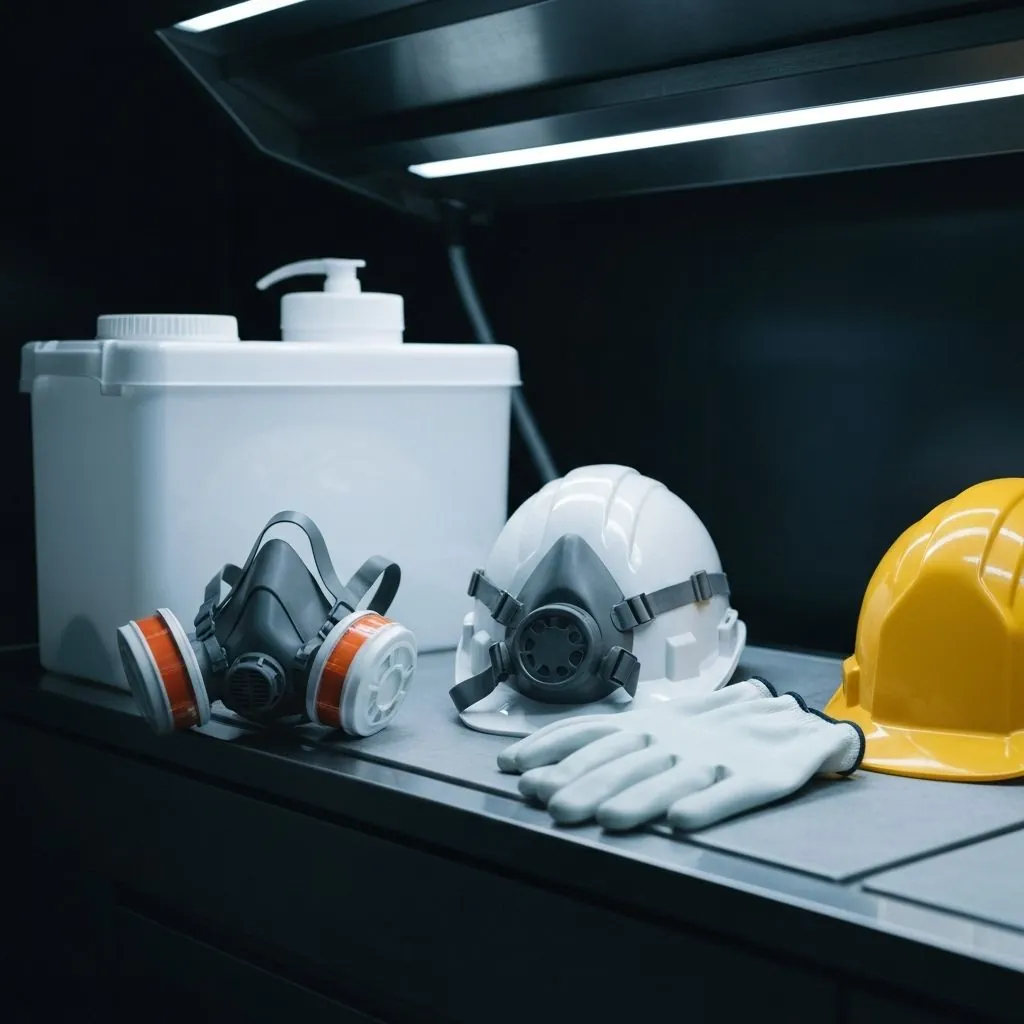 Original labelled containers, gloves and ventilation prevent most chemical accidents before they can start.
Good storage closes off most of these routes. Keep bleach and acidic products on separate shelves, keep everything in its original labelled container, and never combine leftovers to save space.
If someone is exposed
Get them into fresh air immediately, and open windows from outside the affected room where you can. Call 999 if symptoms are severe. When help arrives, tell them exactly which products were involved; the containers themselves are useful evidence.
Seek medical advice even if symptoms seem mild. Irritation from chlorine and chloramine exposure can worsen in the hours after the event, so someone who feels shaken but fine should not simply be sent back to work and forgotten.
How professionals take the risk off your hands
A professional firm deals with all of this through systems rather than luck: one product at a time, rinsing between products, ventilation as standard, secure and separated chemical storage, and COSHH assessments covering every substance brought on site. You can read more about how we approach this on our safety page. It also helps that a well-chosen kit is a small one; our guide to eco-friendly cleaning products covers how simpler chemistry reduces the number of hazardous substances in the building to begin with.
If you would rather nobody in your office ever had cause to think about chloramine gas, that is entirely reasonable. Luxe Loom Cleaning trains every operative in safe chemical handling before they set foot on a client's premises, and we are happy to talk through how that works for your building. Get in touch and we will take it from there.