Sustainability
Eco-friendly cleaning products, without the marketing
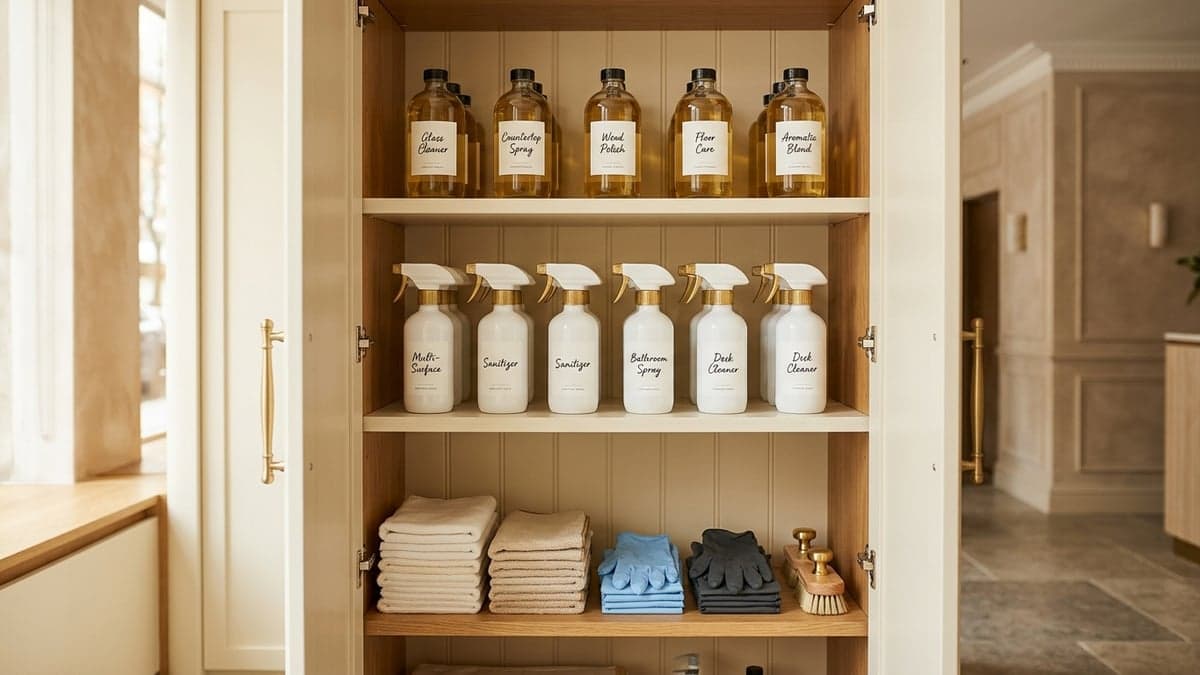
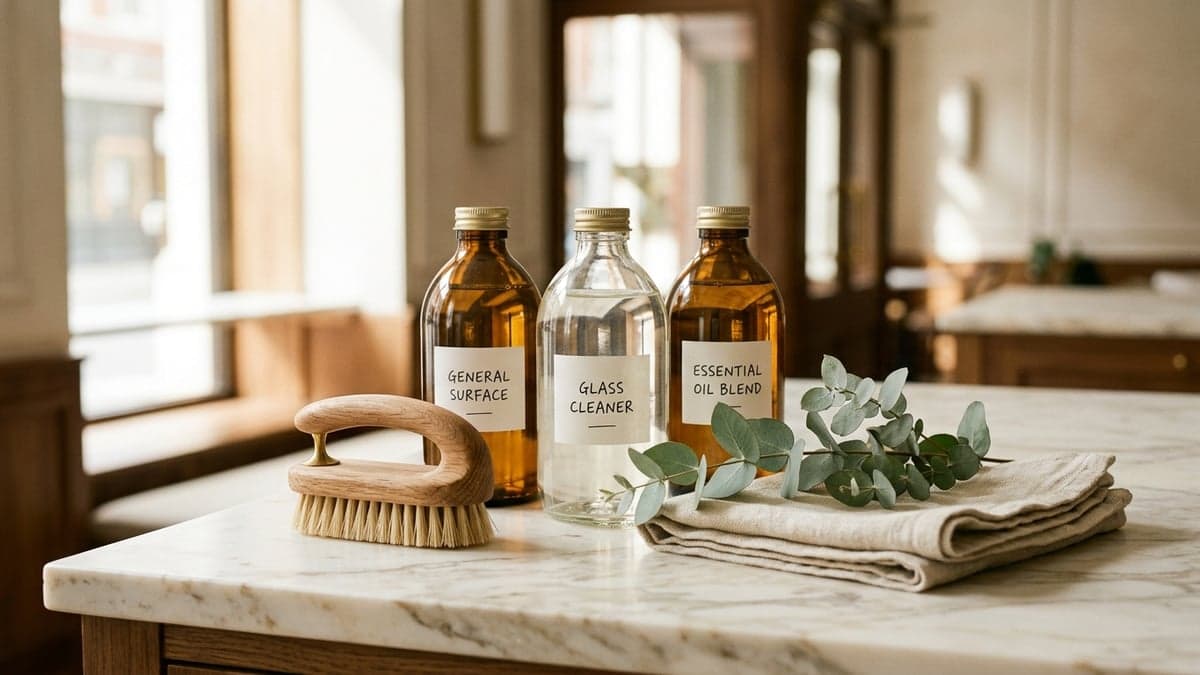
Few corners of the cleaning trade attract as much loose language as the green shelf. Bottles wear leaves and soft colours, claims go largely unpoliced, and buyers are left to guess what any of it means in practice.
Our position is straightforward. Eco products have earned a permanent place in commercial cleaning, and the honest answer to "are they as good?" is: usually, and it depends on the job. This guide covers where they genuinely deliver, where conventional chemistry still earns its keep, and how to tell a certified product from a well-designed label.
What eco friendly cleaning products do well
For the everyday majority of commercial work — desks, floors, glass, general washroom upkeep — certified eco products clean to the same standard as their conventional counterparts. Plant-derived surfactant chemistry has improved considerably, and the better ranges are formulated for professional use, not just the supermarket aisle.
Their real advantages sit off the surface. Lower-VOC formulations are gentler on indoor air, which matters in sealed, air-conditioned offices. They are kinder to the skin and airways of the operatives who work with them all day, every day. They biodegrade more readily, easing what ends up in the watercourse. And they support the credentials an increasing number of tenants and landlords care about, including green building schemes such as BREEAM and LEED.
There is also a quieter benefit for anyone responsible for a building: fewer harsh residues on desks, door handles and kitchen worktops, and less of the lingering chemical smell that clings to a freshly cleaned office. A space can be demonstrably clean without announcing it down the corridor.
None of that is a concession. For most tasks on most days, a certified eco product is simply the sensible specification.
Where conventional chemistry still wins
Honesty requires the other half of the picture, because there are jobs where reaching for the green bottle first costs time or results.
Proven disinfection comes top of the list. Where a surface must be disinfected to a tested standard — food preparation areas, clinical settings, gym equipment — the choice should be led by test data, such as the relevant EN standards, rather than the label's tone of voice. Some certified eco disinfectants pass those tests; plenty of "natural" ones publish no test data at all.
 Gym kit carries a heavier load than the average desk — one setting where we specify by test data, not by label.
Heavy limescale is the second case. Citric and lactic acid descalers do work, but on neglected scale in a hard-water city they need longer contact time and repeat applications; stronger conventional acids get there faster. The same pattern holds for baked-on grease and for established mould: dedicated conventional products remain the more efficient tool.
The conclusion is not that eco products fail. It is that product should follow task, and a good cleaning programme mixes both without embarrassment.
Reading the label: marks that mean something
Words like "green", "natural" and "eco" on the front of a bottle are not regulated. Certification marks are a different matter — they are independently assessed, and the serious ones test cleaning performance as well as environmental impact.
| On the label | What it actually tells you |
|---|---|
| EU Ecolabel | Independently assessed environmental criteria across the product's life cycle, with performance requirements — it must still clean |
| Nordic Swan Ecolabel | A similarly rigorous Nordic scheme with strict chemical restrictions |
| Cradle to Cradle Certified | Focused on material health and the circularity of product and packaging |
| "Plant-based" or "natural" | No legal definition; it means whatever the marketer wants it to mean |
| Cruelty-free and vegan marks | Concern animal testing and animal-derived ingredients; say nothing about environmental impact or performance |
Worth knowing: the front of the bottle is marketing; the back is regulation. If the environmental claim matters to you, look for a certification mark and an ingredients list, not an illustration of leaves.
Method matters more than the bottle
The environmental profile of a cleaning programme is decided as much by how products are used as by which ones are bought.
Dosing is the obvious example. An overdosed product — eco or otherwise — leaves residue, wastes money and cancels out much of the environmental benefit. Concentrates diluted correctly beat ready-to-use bottles on packaging waste alone. Dwell time matters too: many eco formulations need their stated contact time to perform, and wiping them off immediately then declaring them ineffective is not a fair trial.
Microfibre deserves a mention because it reduces chemical demand across the board. The greenest millilitre of product is the one you never needed to use. And whichever chemistry you settle on, never mix products in pursuit of extra performance — our chemical safety guide explains what can go wrong when you do.
Choosing well for your premises
A sensible commercial specification usually looks like this: a certified eco range for daily cleaning, disinfectants chosen on test data for the hygiene-critical areas, and descalers matched to the water and the state of the building. That mix delivers the environmental gains where they are cheap to take and holds the line where results cannot slip.
It also survives scrutiny, which an all-or-nothing position rarely does. A programme that quietly uses a conventional descaler once a quarter while running certified products every day is greener in practice than one that promises purity and falls back on whatever works when nobody is watching. Write the exceptions down, and the whole specification becomes something you can defend to a landlord, an auditor or your own staff.
Luxe Loom Cleaning offers eco-friendly alternatives on request across our services, and we will tell you plainly where we would and would not use them. If you want a programme weighted towards certified products without pretending the trade-offs do not exist, talk to us.