Best Practices
Five practices that separate professional from passable
Almost any cleaning provider can make an office look presentable on the first Monday of a contract. The difference between professional and passable shows up later: in the state of the washrooms on a Friday afternoon, in the grout lines nobody photographs for the brochure, in whether month six looks like week one.
That difference is rarely about effort. It comes down to five practices, all of them unglamorous, that professional firms treat as non-negotiable and passable ones treat as optional. If you are comparing providers, or auditing your current one, these are the things to ask about.
1. A schedule built around the building, not the calendar
A passable provider cleans what the rota says. A professional one builds the rota around how the building is actually used: which doors take the footfall, where people eat, which floors show traffic first. High-use areas earn daily attention, and lower-traffic spaces are cleaned less often but properly, with the saved time spent where it counts.
A sensible starting shape looks like this, adjusted to the premises.
| Area | Sensible frequency | What gets missed without a schedule |
|---|---|---|
| Entrances and reception | Daily | Mats, door glass, finger marks at eye level |
| Washrooms | Daily, checked more often in busy buildings | Dispenser levels, floors, behind the door |
| Kitchens and break areas | Daily | Fridge handles, bin lids, the kettle area |
| Workstations | Daily surface clean, weekly detail | Keyboards, phones, under-desk vacuuming |
| High-level and detail work | Monthly or quarterly | Vents, blinds, skirting, light fittings |
| Carpets, deep extraction | Quarterly to twice yearly | Traffic lanes that darken gradually |
The schedule should be written down and visible to the client. If your provider cannot show you one, they are improvising. It should also flex with the building: an event week, an intake of new starters or a spell of wet weather all change what needs doing, and a professional provider adjusts without being asked.
2. The right product on the right surface
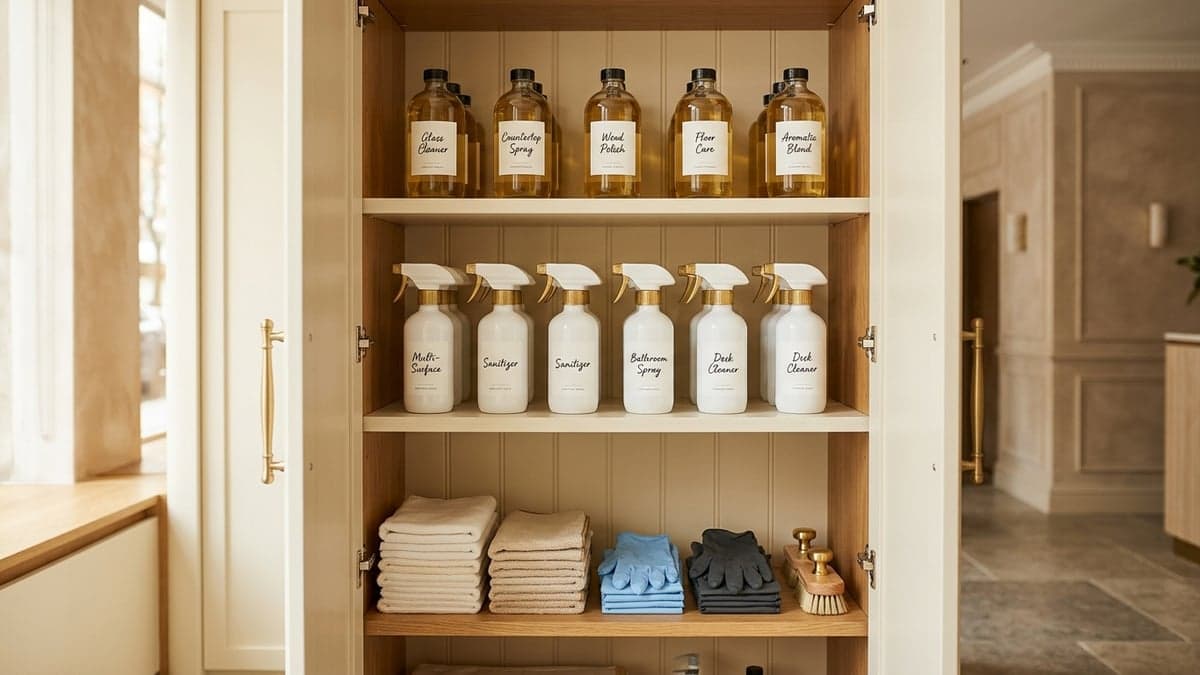
Every surface has products that suit it and products that quietly ruin it. Abrasive creams scratch polished finishes, acidic cleaners etch marble and limestone, and repeated careless bleaching can corrode stainless steel fittings over time. The damage is gradual, which is exactly why an untrained cleaner never connects the product to the result.
This matters commercially as well as cosmetically, because flooring, stonework and fittings are among the most expensive things in any building to replace. Professionals match chemistry to material, dilute to the manufacturer's ratios and rinse where a residue would build up. The wrong product can also be dangerous rather than merely damaging; our guide to what you should never mix covers the combinations that put people in hospital.
3. Trained people, not just supplied people
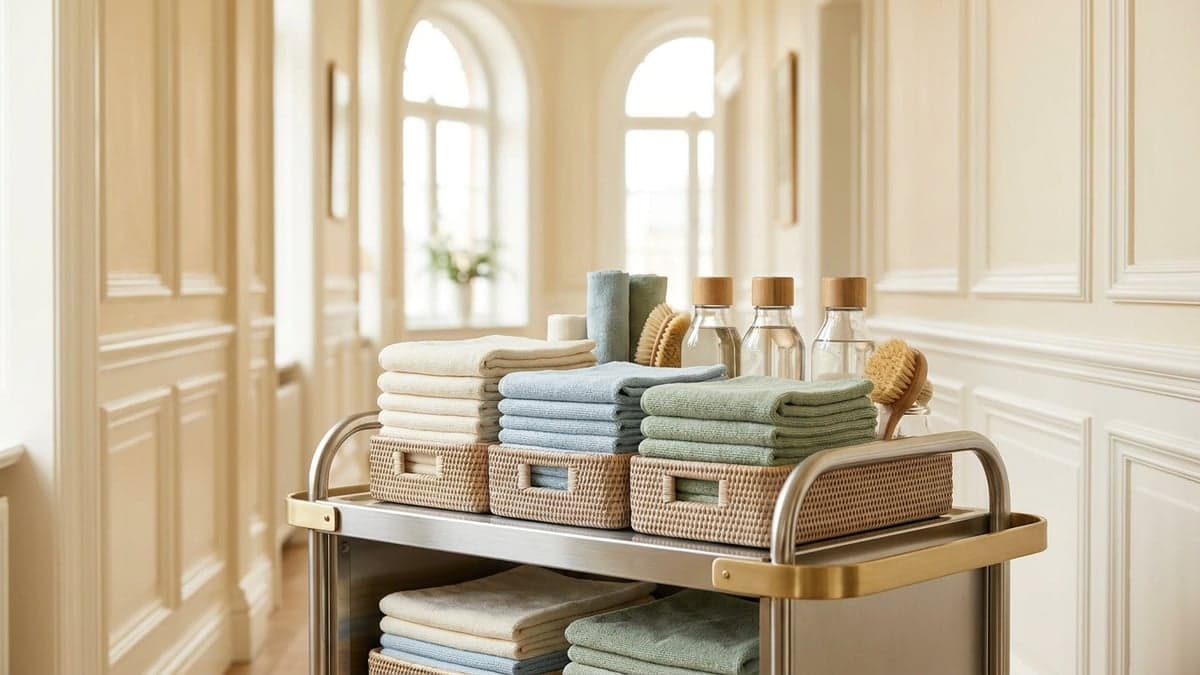
Anyone can be handed a mop. Training is what turns supplied labour into professional cleaning: correct dilution rates, disinfectant contact times, working top to bottom so dust falls onto surfaces not yet cleaned, and colour-coded cloths and mops so that nothing used in a washroom ever touches a kitchen.
 Training shows up in the details: edges, touch points and the places a hurried wipe never reaches.
Training also covers conduct, security awareness and safe chemical handling, because cleaning teams work in client buildings, often outside office hours, and trust is part of the service. Ask a prospective provider how their people are trained and inducted. The quality of the answer tells you a great deal.
4. Discipline around high-touch surfaces
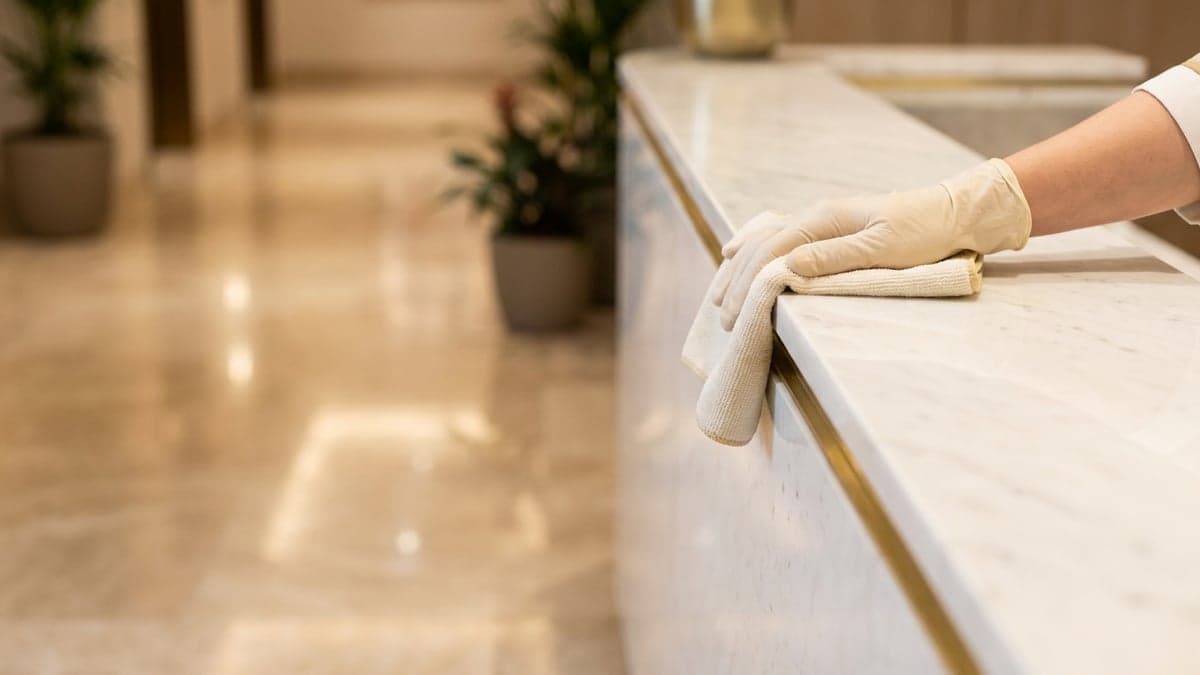
Door handles, light switches, lift buttons, stair rails and shared equipment carry more hands per day than any other surfaces in the building, and they are the main route by which winter bugs travel through an office. A professional specification names these points explicitly and sanitises them daily, rather than leaving them to whoever happens to notice.
Rule of thumb: if more hands touch it in a day than you could count, it gets sanitised every day. Everything else can be argued about; this cannot.
The discipline is in the routine, not the difficulty. Wiping a door handle takes seconds; remembering every door handle, every visit, without fail, is what you are actually paying a professional for.
5. Quality control, where commercial cleaning standards live or die
A standard that nobody checks is a hope. Professional firms put commercial cleaning standards in writing, in a specification that says which areas, which tasks, how often and to what finish, and then inspect against it: supervisor walk-throughs, periodic audits, and a log of anything found short and when it was put right.
Accountability needs a name attached. Someone specific signs off each site, issues get raised with the client rather than hidden from them, and recurring problems change the specification instead of repeating quietly. This is the least visible of the five practices and the one that most reliably predicts what month six will look like.
The short version
None of these five practices is exciting, which is rather the point. Scheduling, correct products, trained people, high-touch discipline and honest quality control are what consistency is made of, and consistency is the real luxury in commercial cleaning.
They are also how Luxe Loom Cleaning runs every one of its services, from daily office contracts to specialist work. If you would like to see what that looks like in your building, get in touch and we will walk the space with you.