Office Cleaning
The waste rules changing under your office bins
For a long time the paperwork side of office waste asked very little of anyone. The bins went out, a form was signed somewhere along the way, and the arrangement rolled on untroubled. That settled period is over. Two changes have arrived within eighteen months of each other: one about what a workplace must separate, one about how waste movements are recorded. Both land on the occupier of the building rather than on whoever drives the lorry.
Neither change is difficult to live with once it is understood. This guide sets out what the current GOV.UK guidance actually requires of an office, where the responsibility sits, and what a competent cleaning contractor should already be doing about it at every visit.
What Simpler Recycling requires your office to separate
Since 31 March 2025, workplaces in England (businesses, charities and public sector organisations alike) have been required to separate their recycling from their general waste. The GOV.UK guidance on workplace recycling is specific about the streams: dry recyclable materials, meaning plastic, metal, glass, paper and card; food waste; and residual waste, which is whatever remains.
Two details catch offices out. First, paper and card must be collected separately from plastic, metal and glass, unless doing so is not technically or economically practicable, so the default position is a paper stream of its own, not one cheerful mixed bin. Second, the food waste requirement applies even where the workplace has no kitchen and serves no food. The banana skins and half-finished salads of an ordinary office count.
The one concession is size. Micro-firms, workplaces with fewer than ten full-time equivalent employees, have until 31 March 2027 to comply. Everyone else is already inside the regime, and the Environment Agency can issue a compliance notice to a workplace that is not separating as required. Non-compliance is an offence, which is a strange fate to court over the positioning of bins.
The waste transfer note, and what is replacing it
A waste transfer note is the document that has always followed business waste out of the building. Every load of non-hazardous waste that leaves your premises needs one: it describes the waste, both parties complete and sign it, and you keep a paper or electronic copy for two years. Regular collections do not need a fresh form each time; a season ticket can cover repeated transfers for up to a year. The note does not even have to be a dedicated form, provided the document used carries the same information.
That paper world is now being replaced by a digital one. The government's digital waste tracking service entered public beta in April 2026, and GOV.UK guidance states that from 1 October 2026, permitted sites receiving controlled waste in England and Wales must record the waste they receive in the service. The stated intention is for digital records to take over from the paper system, but the transition is deliberate: the guidance is clear that waste transfer notes continue to run alongside the digital service for now.
For an office, the practical position is simple. Keep signing and filing, and keep the two-year archive. Before you change any process, check the current GOV.UK guidance, because the dates for waste producers and carriers joining the digital service are still being settled.
Worth knowing: a waste transfer note does not have to be a separate form. An invoice carrying the same information counts, and a season ticket can cover regular collections for up to a year. Whatever form it takes, keep it for two years.
Duty of care: the responsibility stays with you
Underneath both changes sits an older principle that has not moved at all. Any waste that comes from a commercial activity is business waste, and the business that produces it owes a duty of care for it. GOV.UK guidance frames the duty in plain steps: do what you reasonably can to prevent, reuse, recycle or recover waste, in that order; sort and store it safely and securely; complete the transfer paperwork; and check that your waste carrier is registered, which takes two minutes on the public register.
The point that deserves underlining is that responsibility does not leave with the bags. If an unregistered carrier takes your waste cheaply and it surfaces in a lay-by, the paperwork trail leads back to the producer. The duty of care is why the transfer documentation exists: it is your evidence that the waste left by a legitimate route.
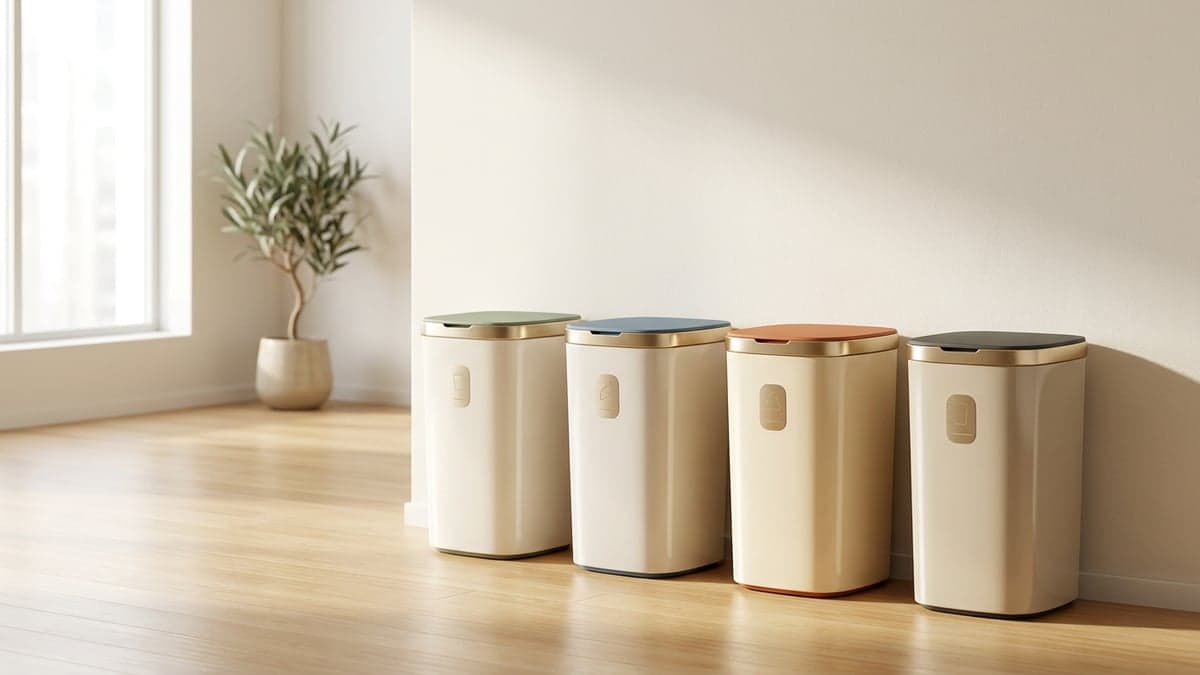
 Separation is decided at the bin station, not the bin store. By the time bags leave the floor, the sorting is either done or ruined.
Stream by stream: where offices go wrong
The rules name the streams; the failures happen at the bin. These are the ones that appear in almost every office.
| Stream | What goes in it | The common mistakes |
|---|---|---|
| Food waste | Food scraps, coffee grounds, tea bags, plate waste | Grounds tipped into general waste; wrappers and stirrers dropped into the caddy |
| Paper and card | Clean paper, envelopes, flattened cardboard | Takeaway coffee cups treated as paper; used tissues and laminated sheets in the stack |
| Plastic, metal and glass | Rinsed bottles, cans, tubs and jars | Half-full drinks poured in bag and all; food-soiled containers contaminating the lot |
| Residual waste | Whatever genuinely remains | Recyclables defaulting here because the right bin is full, missing or three desks too far away |
Contamination is the failure that table hides. One soiled bag folded into a clean stream undoes the sorting of everyone upstream of it, which is why the answer to a contaminated bin is to flag it, not to merge it and hope.
What your cleaning contractor should be doing at each visit
Your cleaning team handles your bins more often than anyone else in the building, which makes them either the guardians of your separation or the point where it quietly collapses. It should be the former, and it should be visible: bins emptied stream by stream, bags kept apart all the way to the bin store, every bin relined, and contamination reported to you rather than smuggled into the nearest sack.
At Luxe Loom Cleaning, recycling and waste-stream separation at each visit is part of the standard service rather than an extra. It sits alongside the rest of the controls described on our safety page. Where waste handling fits in the wider routine, our office cleaning checklist shows the daily and weekly rhythm around it.
What a contractor should not do is set your waste strategy. Which collector you use, which streams you contract for and what the paperwork says are occupier decisions. A good cleaning partner makes those decisions work in practice, every visit, without being asked twice.
Compliance as a by-product of good housekeeping
None of this requires a working group. An office that has the right bins in the right places, a cleaning team that keeps the streams honest, a registered carrier and a two-year paper trail is already where the rules require it to be, and will barely notice the move from signed notes to digital records when its turn comes.
If you would rather the whole subject simply worked in the background, that is a reasonable ambition. Luxe Loom Cleaning keeps waste streams separated at every visit across the London offices we look after, and we are happy to walk your building with you and point out where the current setup leaks. Get in touch and we will arrange it.