Office Cleaning
Ten office cleaning tips worth actually adopting
A building's cleanliness rests on two things: the professional programme behind it, and the daily habits of the people inside it. The programme — schedules, contractors, consumables — is covered in our guide to workplace hygiene. This post is about the other half.
What follows are ten office cleaning tips for the individual desk-holder. None takes more than a few minutes, none needs special equipment, and together they decide whether an office feels looked after between professional visits or merely tidied once a night.
Start at your own desk
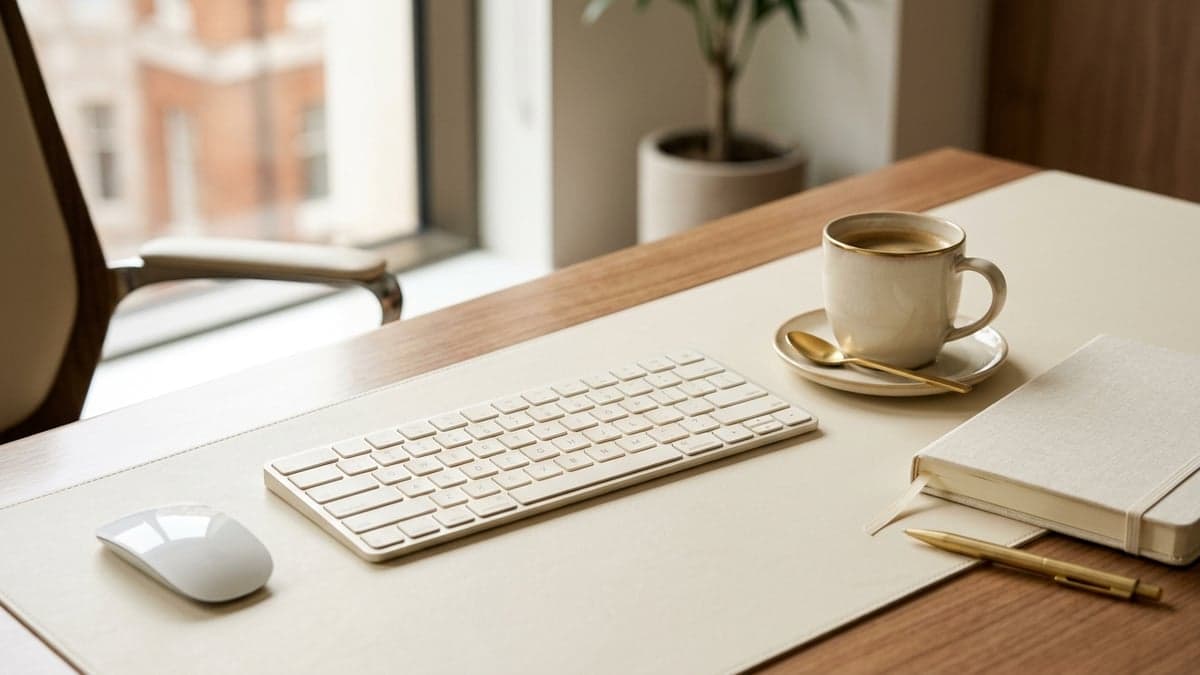
1. Keep a clear-desk habit. Clutter cannot be cleaned around, only shuffled. A contractor faced with paper stacks and cable nests will wipe the visible gaps and move on, through no fault of their own. Five minutes on a Friday afternoon clearing the surface means the next clean is an actual clean.
2. Wipe the surface weekly. Not a dust flick — a proper wipe with a surface cleaner, taking in the edges where forearms rest all day and the patch under the monitor stand. Keep a small pack of wipes in a drawer so the job never depends on a trip to the kitchen. Weekly is enough if it genuinely happens weekly.
3. Eat away from the keyboard. Crumbs work into switches, grease transfers to everything you touch afterwards, and food debris at desks is the single easiest way to interest the building's pests. The kitchen exists; use it.
The electronics nobody cleans
4. The keyboard. Tip it upside down and tap out the debris, then go over the keys with a sanitising wipe that has been wrung out — damp, never dripping. Once a week keeps it civilised.
5. Phones, mice and headsets. Held against faces and palms for hours, cleaned almost never. A weekly wipe covers it, and always after a cold — there is no point recovering at a desk that still carries last week's germs. Hot-desking sharpens the case: if the equipment is shared, the wipe-down belongs at the start and end of every sitting.
6. Screens. A dry microfibre cloth handles almost everything. Avoid harsh sprays and ammonia-based glass cleaners on coated panels; they can damage the finish permanently. If a mark will not shift dry, a cloth barely dampened with plain water is as far as you should go — anything stronger is a job for whoever maintains the equipment.
| Item | How often | How |
|---|---|---|
| Desk surface | Weekly | Clear it first, then a proper wipe with surface cleaner |
| Keyboard | Weekly | Tip and tap, then a wrung-out sanitising wipe |
| Mouse and phone | Weekly, and after any illness | Sanitising wipe, including the underside |
| Headset | Weekly | Wipe the ear pads and mic boom |
| Screen | Fortnightly | Dry microfibre; no harsh sprays |
| Your mug | Daily | Hot water and washing-up liquid, not a cold rinse |
Rule of thumb: if you would not put a biscuit down directly on it, it needs a wipe. Most keyboards fail that test comfortably.
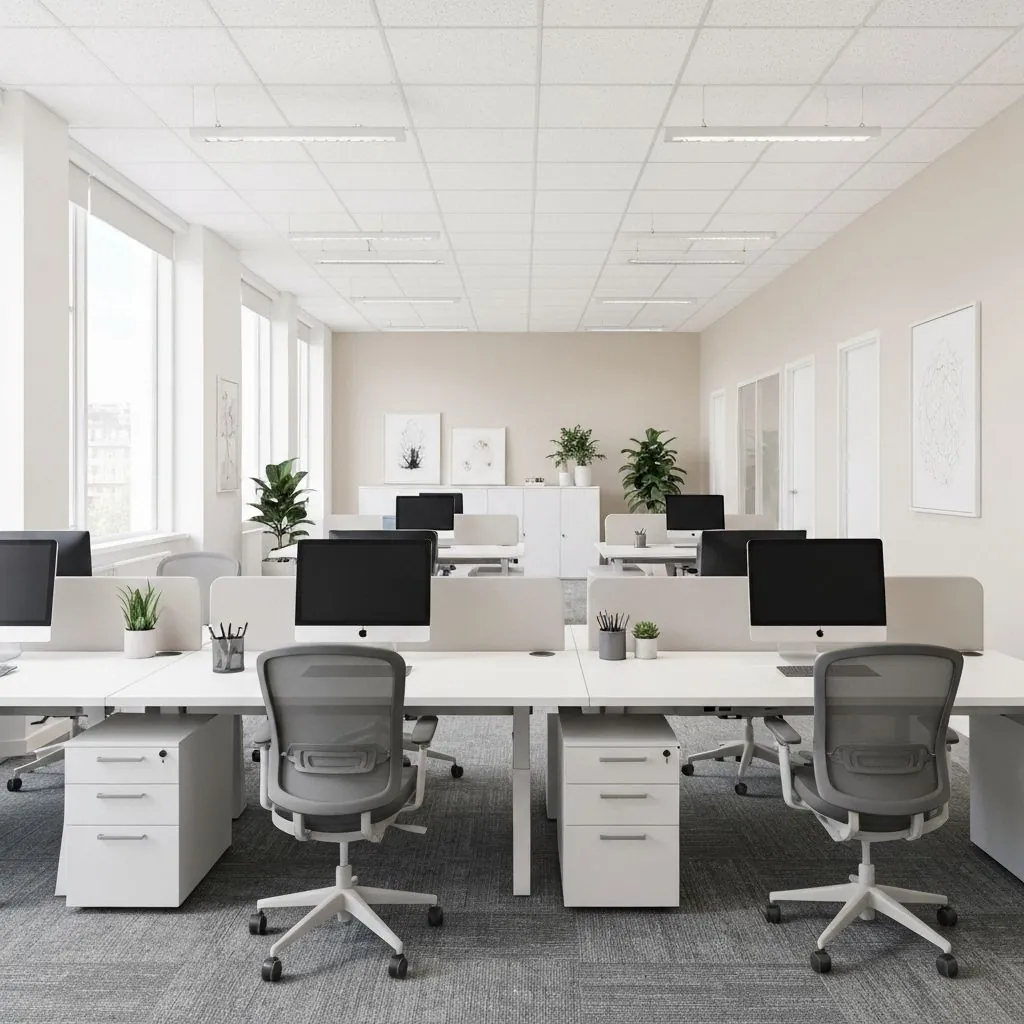 Small habits, repeated by everyone, are what a clean office actually looks like.
Kitchen etiquette that keeps the peace
7. Wash your mug properly. Hot water and washing-up liquid, not a swirl under the cold tap. And carry crockery back the same day — the archaeology of mugs on desks is where office kitchens go to fail.
8. Respect the shared fridge and microwave. Label and date anything you put in the fridge, and take leftovers home before the weekend. If your lunch spattered the microwave, the thirty-second wipe belongs to you, not to whoever heats their soup next. The same logic covers the dishwasher: if it is full and clean, emptying it is a two-minute act of citizenship rather than someone else's job.
Kitchen etiquette is worth taking seriously precisely because it is where goodwill frays first. Nobody resigns over a dusty shelf; unwashed pans and a fridge nobody owns are another matter entirely.
The habits that hold the rest together
9. Take hand hygiene seriously. Washing properly and using the sanitiser stations near entrances and shared equipment is the single most effective habit on this list, because hands move germs around a building faster than anything else. It matters doubly when you are getting over something — and if you can work from home while ill, your colleagues will quietly thank you.
10. Manage your own waste. Food waste goes to the kitchen bins, not the small one under your desk, where it sits overnight advertising itself. Sort recycling as the building intends rather than as optimism dictates. An overflowing desk bin undoes everyone else's effort in one glance.
None of this requires a rota, a policy document or a passive-aggressive note by the kettle. It requires each person to treat the shared space with roughly the care they would want shown to their own kitchen — and it works best when it is visibly normal, because habits in an office are contagious in both directions.
Where the habits stop
Individual habits hold the line between professional visits; they do not replace them. Carpets, washrooms, high-level dust and the periodic reset described in our deep cleaning checklist belong to a scheduled programme with proper equipment behind it. The two halves reinforce each other: a well-kept desk makes the contractor's work count for more, and a properly cleaned building makes the individual habits feel worth keeping.
Luxe Loom Cleaning looks after that side for offices across London. If the professional half of the equation needs attention, contact us and we will take it from there.