Office Cleaning
What determines office cleaning cost in London?
Ask five London cleaning companies to quote for the same office and you will get five different numbers, sometimes far apart. That is not because anyone is guessing. The price of cleaning an office is built from a handful of variables, and each firm weighs them differently.
This guide sets out what those variables are and how each one moves the price, so you can read a quote line by line rather than comparing totals blind. We have deliberately left out headline figures: any number published without seeing your building would be a guess dressed up as guidance.
In short: office cleaning cost in London is driven by floor area and layout, how often you clean, whether the work happens out of hours, what specialist areas you have, who supplies the consumables, and the plain fact of operating in the capital. The cheapest quote usually saves money by removing something you need: insurance, legal employment or proper training.
The six factors that move the price
| Factor | How it moves the price |
|---|---|
| Size and layout | More floor area means more time, but layout matters as much: an open-plan floor cleans faster than the same area divided into cellular offices and meeting rooms |
| Frequency | More visits raise the total but lower the cost of each visit; infrequent cleans take longer every time because more has accumulated between them |
| Out-of-hours work | Early, late and overnight slots narrow who can staff them, and that scarcity is reflected in the rate |
| Specialist areas | Kitchens, showers, server rooms and washroom-heavy floors need more time, different products and in some cases specific training |
| Consumables | If the contract includes soap, paper and bin liners, that is a genuine cost that belongs in the price rather than hidden inside it |
| London location | Wages, travel time and parking or congestion costs all run higher in the capital, and an honest quote says so |
Two of these are where buyers go wrong. Frequency is the one businesses most often get backwards: cutting from five visits a week to two rarely cuts the bill in proportion, because each remaining visit now deals with more accumulated soil and takes longer. And layout explains why two offices of identical floor area can be quoted differently: partitions, small rooms and dense desking mean slow detail work, while open floors suit efficient machine work.
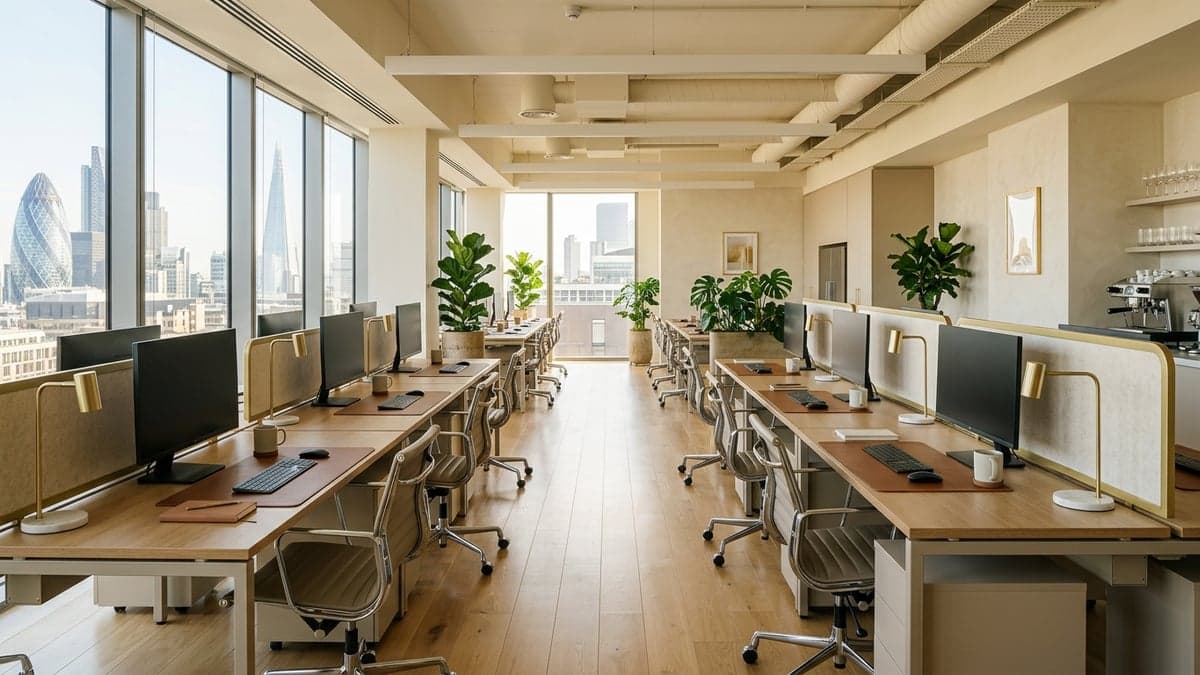
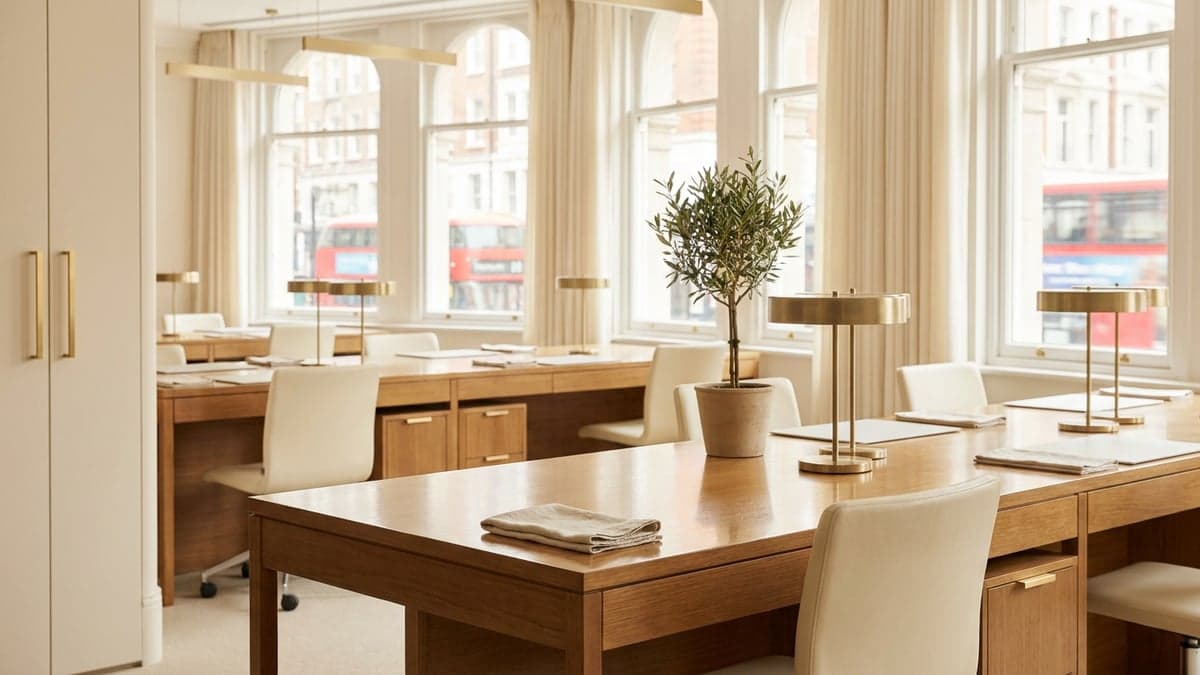
 Two offices with the same floor area can clean very differently: layout, fittings and how the space is used all shape the time a visit takes.
Why the cheapest quote is rarely the bargain it looks
Cleaning has low barriers to entry, and the bottom of the market is crowded with operators whose prices only work because something is missing. When one quote sits far below the rest, the gap usually lives in one of three places.
The first is insurance: no employer's liability or public liability cover, which becomes your problem the day someone is injured on your premises. The second is employment, meaning staff paid below legal minimums or without right-to-work checks, neither of which you want attached to your building. The third is the work itself: no COSHH assessments, no training, no supervision, with over-dilution and skipped tasks doing the cost-saving invisibly.
None of this shows up in a quote document. It shows up later, as constant turnover of cleaners, slipping standards, or a liability question with your company's name near it. The way we handle chemicals, training and risk assessment is set out on our standard page; it is a fair benchmark for what any contractor should be able to show you, whatever they charge.
Worth knowing: you are entitled to ask any cleaning contractor for proof of insurance, their COSHH assessments and confirmation that staff are legally employed. A professional firm will produce all three without hesitation. A pause is information.
Common questions about office cleaning quotes
Is office cleaning priced hourly or as a contract?
Both models exist. Hourly pricing suits ad-hoc or short-term work; regular office cleaning is usually quoted as a fixed contract price built from the visit schedule and the task list. Contract pricing generally serves the client better, because the provider can plan staffing properly, and it places the risk of a slow evening on the contractor rather than on you.
Does a small office cost proportionally less to clean?
Not quite. Every visit carries fixed overheads (travel, setup, supervision, administration), so small offices pay more per square metre than large ones. This is why most providers set a minimum visit length, and why halving the number of visits never halves the bill.
Is out-of-hours cleaning always more expensive?
Usually somewhat, and it is often still the right choice. Cleaning an occupied office is slower and more disruptive than cleaning an empty one, so part of the out-of-hours premium is recovered in efficiency. Daytime cleaning has its own case: a visible presence, immediate response to spills. But that is a service decision more than a cost-saving one.
What should a proper quote include?
A task list with frequencies, the visit schedule, who supplies consumables, insurance details and a named point of contact. If a quote is a single number on a page, you are looking at an opening position, not a price. Our services page shows how we scope this before a number is ever attached.
Getting a number that means something
The honest answer on office cleaning cost in London is that it depends on your building, and anyone who quotes before seeing it is guessing. A proper quote follows a walk-through: floor by floor, washrooms counted, kitchen inspected, access and hours understood.
That is how Luxe Loom Cleaning prices every contract: we visit, listen to what has and has not worked before, then put a schedule and a number against it that we can stand behind. If you would like that walk-through, get in touch and we will arrange it.