Safety
COSHH and commercial cleaning: what facilities managers need to know
The Control of Substances Hazardous to Health Regulations 2002 (COSHH, once the mouthful is dispensed with) govern how hazardous substances are used at work in the UK. Cleaning products are the most common way such substances enter an ordinary commercial building, which is why a set of regulations written with factories and laboratories in mind lands, quite properly, on the desk of the facilities manager.
COSHH has a reputation for paperwork that is not entirely deserved. Beneath the terminology it asks for a short series of reasonable things: know what is being used, understand what it could do to someone, and take sensible steps about both. This guide sets that out in plain English. It is practical guidance rather than legal advice; for the definitive word on any point, the Health and Safety Executive's published guidance is the authority to consult.
What COSHH cleaning compliance actually covers
COSHH applies to substances that can harm health when they are used, handled, stored or generated at work. In a cleaning context that means the contents of the chemical cupboard: descalers, degreasers, bleach and other disinfectants, oven and washroom chemicals, and anything else carrying a hazard pictogram on its label.
Not every product qualifies. A mild neutral detergent is unlikely to be a COSHH matter; a strong acidic descaler certainly is. The label and the supplier's safety data sheet establish which side of the line a product falls on, which is one reason those sheets carry so much weight.
The regulations are concerned with routes of exposure as much as with contents. COSHH looks at how a substance could realistically reach a person during the working day: skin contact with an undiluted concentrate, mist breathed in during spraying, a splash to the eye while decanting. That includes the people who simply occupy the building while cleaning happens around them.
Employer duties, in plain English
The duties sit with employers. In a contracted arrangement that means both parties: the cleaning company for its own operatives, and the client organisation for everyone else affected by the work. Stripped of legal phrasing, the obligations come down to a short list.
| Duty | What it means in practice |
|---|---|
| Assess the risk | Identify each hazardous product in use, who could be exposed and how, before the work starts |
| Prevent or control exposure | Use a safer product where one will do the job; control dilution, method and ventilation where it will not |
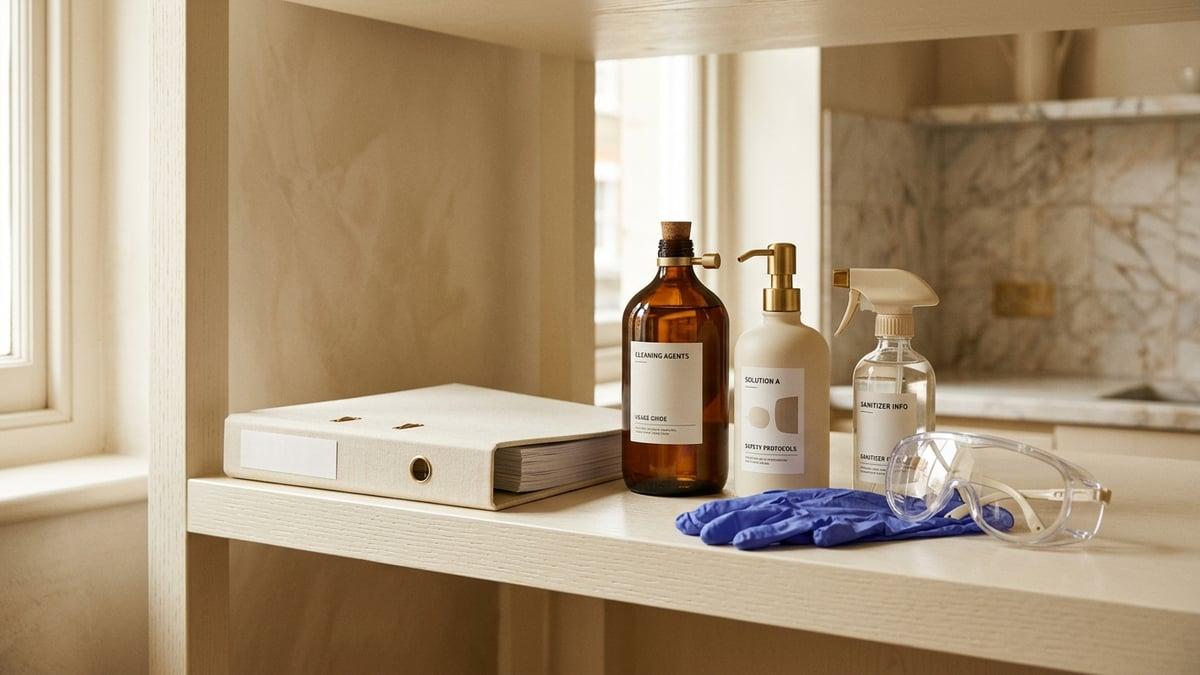
| Keep safety data sheets | Hold a current sheet for every hazardous product on site, somewhere people can actually find it |
| Store substances properly | Original labelled containers, incompatible products separated, secured away from the public |
| Inform and train | Everyone who uses the products understands the hazards and the controls before they use them |
| Provide protective equipment | Gloves, eye protection and the rest where the assessment calls for them, at no cost to staff |
None of this demands a consultant for a typical office. It demands that someone owns the list of products in the building, keeps it honest, and makes sure the paperwork describes what actually happens on a Tuesday evening rather than an idealised version of it.
Worth knowing: a safety data sheet is not a risk assessment. The sheet is the supplier's information about the product; the assessment is a judgement about how that product is used in your building, by your people, in your conditions. Filing the sheets and stopping there is the most common COSHH shortfall of all.
What good practice looks like from a contractor
A capable cleaning contractor arrives with COSHH already handled, and is pleased to show you. That means a defined product list, not whatever was on offer that month, a written assessment for each hazardous product, current data sheets held in a site file where they can be found at speed, and training records for every operative who will work in your building.
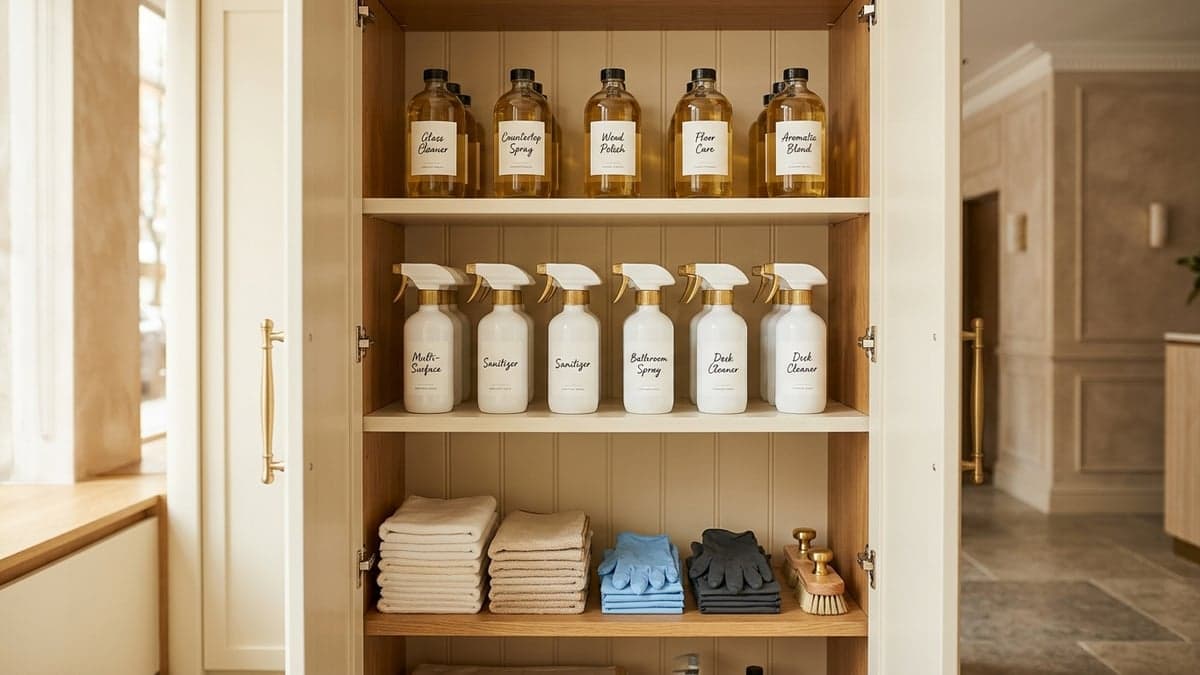
 A tidy, separated chemical store is usually the quickest available reading on a contractor's whole approach.
Look also at the quieter habits. Products kept in their original labelled containers, never decanted into anonymous bottles. Dosing systems that take dilution out of guesswork. Incompatible products stored apart: the pairings covered in our guide to cleaning chemical safety are exactly what COSHH storage duties exist to prevent. And a product list kept deliberately short, because every substance removed from a building is a hazard that no longer needs assessing, storing or training for.
Red flags worth acting on
Some warning signs deserve a conversation, not the benefit of the doubt. Unlabelled spray bottles are the classic: a decanted product with no identity defeats every data sheet in the file. A site file that cannot be produced, or that was last touched years ago, suggests the system exists on paper only.
Operatives who cannot say what a product is or why they wear gloves for it have not been trained, whatever the records claim. A strong chemical smell after every clean points to overdosing, which is a cost and an exposure at once. And a product range that grows unchecked, a new bottle for every problem, is how buildings end up storing substances nobody has assessed.
None of these makes a contractor negligent by itself. A pattern of them tells you where compliance sits on their list of priorities.
Kept simple, kept current
COSHH rewards plainness. A short product list, honest assessments, sheets that can be found, training that actually happened and storage that would pass a stranger's glance. That is the whole discipline, maintained, not performed. The HSE's guidance is written for exactly this purpose, and it is considerably more readable than its reputation suggests.
Our own approach to chemical handling, training and storage is set out on our standard page. If you would rather your cleaning contract arrived with the COSHH thinking already done (assessments written, sheets filed, operatives trained before they set foot on site), Luxe Loom Cleaning is happy to talk it through. Get in touch and we will start with the product list.